Reference
Paid ads glossary for service businesses
Plain-English definitions of the terms you will hear from Google Ads and Meta Ads managers, so you can follow what the report is actually saying.
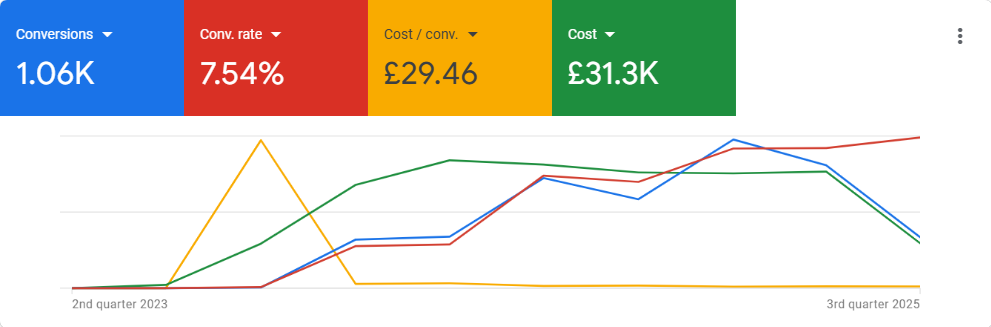
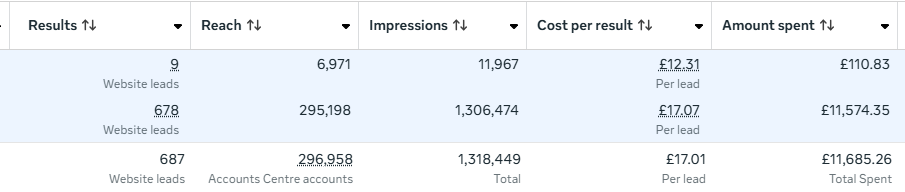
40+Campaigns launched
5,000+Leads generated
£1m+Ad spend managed
 Edward Eaton runs every account personally
The terms
38 definitions, in alphabetical order.
- Ad set
- The level in Meta where you set audience, budget, schedule and placements.
- Attribution
- Deciding which ad or channel gets credit for a conversion. Platforms and analytics often disagree.
- Call tracking
- Using trackable numbers to see which ads and keywords produce phone calls.
- Campaign objective
- What you tell Meta to optimise for, such as Leads or Sales. It changes who sees the ad.
- Conversion
- The action you are paying for: a form, a call, a booking or a purchase.
- Conversion rate
- The percentage of clicks that become conversions.
- Conversion tracking
- Recording conversions so the platform and you can see which ads produced them. Without it, bidding optimises blind.
- Conversions API
- A server-side connection that sends conversion data to Meta more reliably than the Pixel alone.
- Cost per sale
- Ad spend divided by customers won. The number that decides whether ads are profitable.
- CPA (cost per acquisition)
- Ad spend divided by the number of conversions you defined, such as a form, a call or a purchase.
- CPC (cost per click)
- What you pay each time someone clicks your ad. A cheap click is not a good one if it never enquires.
- CPL (cost per lead)
- Ad spend divided by the number of leads. Useful, but only meaningful alongside lead quality and what happens next.
- CPM (cost per thousand impressions)
- What it costs to show your ad 1,000 times. A measure of how expensive attention is in an audience.
- Creative fatigue
- Falling results because the same audience has seen the same ad too often.
- CTR (click-through rate)
- The percentage of people who saw the ad and clicked. A high rate with few enquiries points to a page problem.
- Frequency
- How many times the average person has seen your ad. High frequency with falling results suggests fatigue.
- Impressions
- The number of times an ad was shown.
- Keyword match types
- Settings (broad, phrase, exact) that control how closely a search must match your keyword.
- Landing page
- The page an ad sends people to. It should match the ad's promise and make one action easy.
- Lead
- An enquiry from a potential customer. Not all leads are equal.
- Lead form
- A form that opens inside Facebook or Instagram. High volume, lower intent than a landing page.
- Lead generation
- The process of attracting and capturing enquiries from potential customers, usually through ads and landing pages.
- Lead qualification
- Filtering enquiries by area, budget, timeframe or need before they reach your phone.
- Lead quality
- How likely a lead is to become a customer. Tracked by marking which enquiries were good.
- Learning phase
- A period after a campaign launches or changes when the platform is still working out who to show ads to.
- Local Services Ads
- Google's pay-per-lead listings with a Google Guaranteed or Screened badge, available in selected categories and areas.
- Lookalike audience
- A group Meta builds that resembles your existing customers or leads.
- Meta Pixel
- A snippet on your website that reports visits and actions to Meta.
- Negative keywords
- Searches you tell Google not to show your ads for, such as 'jobs', 'free' or 'DIY'.
- Performance Max
- A Google campaign type that runs across Search, YouTube, Display, Maps and more from one set of assets.
- Quality Score
- Google's estimate of how relevant your ad, keyword and page are. Higher scores usually mean lower costs.
- Responsive Search Ads (RSA)
- Google ads built from several headlines and descriptions that Google mixes and tests.
- Retargeting
- Showing ads to people who already visited your site or engaged with your ads.
- ROAS (return on ad spend)
- Revenue divided by ad spend. 4x means £4 of revenue for each £1 spent. It ignores margin.
- Search campaign
- Google Ads text ads shown when someone types a relevant search. Captures existing demand.
- Search terms
- The actual phrases people typed before clicking your ad. Reviewing them is the fastest way to cut waste.
- Smart bidding
- Google's automated bidding that adjusts bids using conversion data. Only as good as the conversion tracking beneath it.
- UTM parameters
- Tags added to links so analytics can show which campaign sent a visitor.
Want these numbers explained for your account?
Send a few details about your business and current spend. You will get an honest view of what is realistic and what we would do first, usually within one working day.
Before you send
We're a fit if you're already generating business, can handle more leads, and have a monthly ad budget of £500+ (£1,000+ recommended). We ask for a 3-month minimum so the work has time to compound.